Latest News

Guidelines, Support and Resources Following the Bondi Tragedy

18 December 2025 by Rev. Dr Stephen Robinson

Resources to support congregations and faith leaders.


In my role as National Disaster Recovery Officer have been contacted by several people since Sunday’s horrific attack on the Jewish communities celebrating Chanukah by the Beach. 

Their queries have been varied but two things stood out:

  • People (particularly leaders) concerned about their vulnerability and wanting to know how they might better prepare to support their people in the face of violent attack, should that take place, and;
  • People who were looking for resources to support their congregations (by way of liturgical or other resources for their gathering next week).
The Shepherd Project material

Over the past year I have been part of a team working on developing resources for faith leaders to plan for and respond to violent attacks on houses of worship.  Labelled “The Shepherd Project” this work was supported by the NSW Government through the “Safe Places for Worshipping Communities” grant from Multicultural NSW.

Resources created are:

The Leaders’ Resource Manual – A comprehensive manual which helps leaders understand the issues they would face in helping their people respond to a violent attack and assist in recovery. This includes response sheets and very important resources.

The Planning Workbook – This works with the Leaders’ Resource Manual and contains a planning framework and worksheets to assist faith leaders to form a comprehensive response plan, ahead of a possible attack on their people.

Videos – Seven short videos which give a brief overview of important aspects of planning and recovery.

These are very comprehensive resources and are best used with some guidance or workshopping, but they do stand alone as well.  They can be downloaded from the webpage.

The page also has a link to email me and the team to arrange for a workshop for your leadership or bring one to one guidance in the use of the materials.  I will be able to respond to these after the Christmas break.

Other Resources

Another excellent resource available from the Assembly website is “Carrying Rainbows of Hope” which includes examples of liturgies after tragedies and articles on how to write them. It can be found here.

Supporting congregations this Sunday

Some very good prayers have been written in the past week.  I have added these here as a resource which could be helpful as they are – or for adaptation for congregational worship.

  • Our President, Rev. Charissa Suli, wrote the following message and prayer.
  • The Moderator of the Synod of NSW and the ACT, Rev. Faaimata Havea Hiliau wrote a pastoral statement available here.
  • The Moderator-Elect of the Synod of NSW and ACT, Rev. Pablo Nunez wrote a pastoral reflection and prayer here.
Prayers

In the Wake of Violence and Hate
God,
In the wake of  violence and hate,
May compassion flow;
May love be preached in word and action;
May hate be rejected;
May we temper our outrage with the Fruit of your presence as Spirit;
May we remember your call love neighbour and enemy;
May we reject evil, whilst at the same time having the wisdom to not add to it;
May we know you to be at work for good, even in the midst of heartache and suffering.
Centre us in your presence,
That we might be sacred ground for hope, peace, love and healing,
Even amidst trouble and strife.
As Christ, speak as Word we might know what to do and say,
And thereby do justly,
Love with mercy and kindness,
And walk humbly with you,
Immanuel - God with us.
In the wake of violence and hate we pray. 

Amen. 

RevJon Humphries


I add the following offering in the context of the coming of Christ this season…

God with us. Emmanuel

You came to be with us in all things.  In joy, in pain, in life, in death, in resurrection.
Be with those who know great grief and confusion.
Dwell close to those who – through acts of hatred and bloodshed – now mourn the loss of loved ones, the loss of hope, the loss of safety.

Dwell amongst our brothers and sisters in Bondi, as you dwell among all who hurt across the world.  Meet them in their prayers, in their conversations and in their sighs too deep for words.

God Emmanuel.  Have mercy on us

 God who binds the wounds of the broken-hearted

Be close to those who suffer injury of body, of mind, of soul.  Heal and bless those who carry the pain of injury, of trauma of shattered worldviews and broken lives.

God who heals. Have mercy on us

 Prince of Peace

We pray for peace.  In Israel, in Gaza, in every strife-torn land and here.  Not just the cessation of conflict but as your deep and abiding gift. We yearn for when you will wipe away all tears from their eyes.  Our eyes. When there will be no more; grief, crying, and pain will be no more, because the previous things have passed away 

God of peace.  Bring us your peace.


Photo Supplied by Wilson Drayton

About the Author

Rev. Dr Stephen Robinson
National Disaster Recovery Coordinator

Rev. Dr. Stephen Robinson is the National Disaster Recovery Officer of the Uniting Church in Australia.

Stephen has been in ordained ministry in the Uniting Church since 1993. He is a specialist in pastoral care during and following disasters and emergencies and was a Rural Fire Service member and Chaplain from 2006 to 2013.

Stephen has been the National Disaster Recovery Officer for the Uniting Church since 2013 and has been a  Coordinator/Senior Chaplain of the NSW Disaster Recovery Chaplaincy Network (DRCN) since 2009.

In 2020 Stephen was awarded a Churchill Fellowship (conducted in 2022) “Faith Leaders’ Responses to Violent Attacks on Houses of Worship in New Zealand, the USA and the UK”. 

You can contact Stephen on his email at stephenr@nswact.uca.org.au

A New Heaven and a New Earth

10 December 2025 by Rev. Dr Peter Walker  

As we move into Advent and Christmas, and when we read from Revelation at the beginning of the new year, we recall God’s hope for us, and our hope in God.

I heard Nelson Mandela speak in 1991 at a prayer service for South Africa. I sat up all night a few months earlier watching live coverage of his release from prison. Perhaps you did too. The service was in Sydney’s St Mary’s Cathedral. I’m surprised I was there. I wasn’t very prayerful then. I’m still working on it now! Yet I’m glad something drew me in. It was the first time I understood what it means to be sustained by hope.

It was also the first time I gained any sense of meaning in these words from the book of Revelation, which are our lectionary reading for New Year’s Day this summer:

Then I saw a new heaven and a new earth, for the first heaven and the first earth had passed away… And I saw the holy city, the new Jerusalem, coming down out of heaven from God… And the city has no need of sun or moon to shine on it, for the glory of the Lord is its’ light ... Then the angel showed me the river of the water of life, flowing from the throne of God … On either side … was the tree of life… and the leaves of the tree are for the healing of the nations.

The prayer service was deeply moving. Beautiful hymns were sung and magnificent prayers were offered. It was all wonderful. Yet I was captivated by the words of Nelson Mandela, a prisoner on Robben Island for 27 years and sustained only by the hope of change in his country, and the words of John the Apostle, a prisoner on the Island of Patmos, who was not far from death at the time of his Revelation.

John had a vision of God’s new creation. He knew, as did Mandela, that holding faithfully, confidently, even tenaciously to what we hope for is the way to endure all hardship. I sat below the grand windows and arches of St Mary’s. I listened to Mandela’s hope (and courage) and his description of how the steadfast commitment of many churches to justice was a key reason for change in South Africa. And then I heard John’s vision of a world made new. I heard those words not only with my ears but somewhere deeper than that – for the first time.

I wasn’t overwhelmed but was gently taken hold of when I realised that God draws and saves people through the power of hope. It led me to reflect on Christ as the hope of the world. A hope that feels like the river of life itself. Healing for us. Healing for the nations. Christ is our hope and our salvation. John seemed to know that human language is incapable of expressing the reality of eternal things. Yet rather than be paralysed by those limits, he is set free by his inspired imagination to portray the wonder of the Gospel in a masterpiece of hope. His vision is that, in the end, we meet the beginning.

This is where the inspiration to hope lies. Rather than saying I am making all new things, God says in John’s vision, ‘See, I am making all things new’. A small difference in wording but a huge difference in meaning. God’s hope is in this world and God seeks to reconcile and renew it, and us. Creation will not be replaced by a ‘new’ world. Waiting at the end of our hopes is the renewal of life. This world is not dispensable.

I once thought of these visions as daydreaming. Now I think of them, and the hope they inspire, as more important than anything else in all the Scriptures. The words of Mandela and, most importantly, the words of Revelation brought an end to my adjustment to what is and, as I think back, were the beginning of my decision (a hopeful decision) to live for what might be. Hope is the way God stirs. As we move into Advent and Christmas, and when we read from Revelation at the beginning of the new year, we recall God’s hope for us, and our hope in God.

Hope is the way God stirs. As we move into Advent and Christmas, and when we read from Revelation at the beginning of the new year, we recall God’s hope for us, and our hope in God.

About the Author

Rev. Dr Peter Walker
General Secretary, Uniting Church Synod of NSW and ACT

Peter Walker commenced as General Secretary of the Uniting Church Synod of NSW and the ACT in October 2025. Peter is an ordained Minister or the Word and has served the Uniting Church in congregational, presbytery, chaplaincy, and educational roles, including Principal of United Theological College, Chairperson of Canberra Region Presbytery, President of the Australian Capital Territory Council of Churches, Director of the Charles Sturt University Centre for Public and Contextual Theology and Lecturer in its School of Theology.

Peter studied history and theology at the University of NSW, McGill University, and Charles Sturt University, and is a graduate of the Australian Institute of Company Directors.

Peter’s commitment to serve the church is inspired by the humility of people who quietly make life meaningful and hopeful for others through their commitment to live and love in the ways of Jesus. He is a published author, most recently The Theological Promise of Religious Diversity and co-editing Theology on a Defiant Earth: Seeking Hope in the Anthropocene.

Just One Gift Can Change a Life This Christmas

02 December 2025

Western Sydney’s grassroots community services are joining forces this Christmas to launch the Just One campaign—a collective appeal showing how one act of kindness can change the course of a life.

Five local organisations unite to support Western Sydney families in need

Western Sydney’s grassroots community services are joining forces this Christmas to launch the Just One campaign—a collective appeal showing how one act of kindness can change the course of a life.

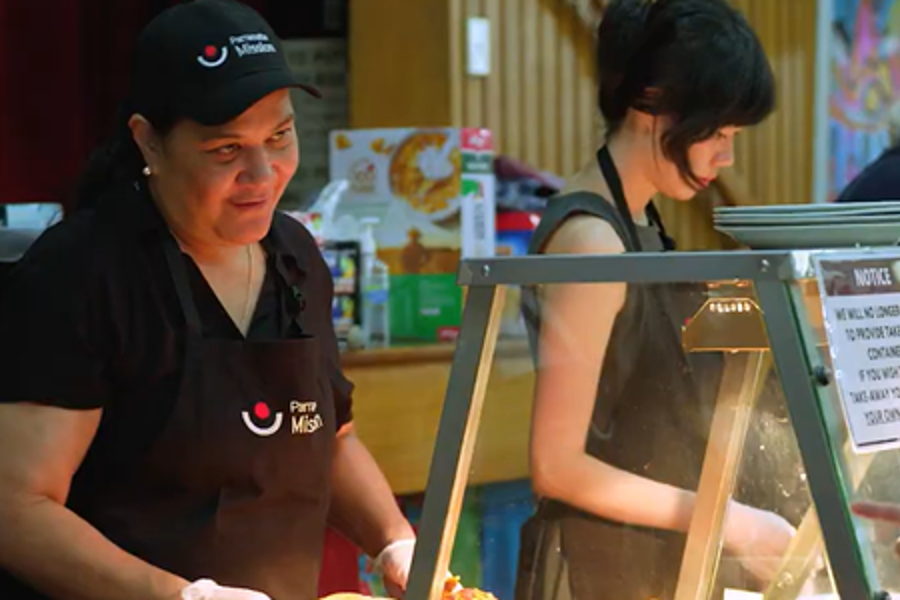
The campaign brings together five Uniting Church organisations—Parramatta Mission, Junction 142, Lifeline Macarthur & Western Sydney, Bidwill Uniting, and Gateway Family Services — each providing essential, local support to people doing it tough.

From emergency meals and safe beds to a crisis call helpline, playgroups, and Christmas hampers, the Just One network of care meets people where they are, offering practical help and compassion when it’s needed most.

“Hardship rarely comes on its own,” said Craig Corby, spokesperson for the Just One campaign. 

“Someone who can’t afford food might also be struggling with rent or isolation. By working together, these five organisations ensure help reaches people in joined-up ways—food, shelter, support, and hope.”

Every dollar donated to Just One is shared equally among the five partners, multiplying the impact of each gift.

This Christmas, the campaign invites the community to make Just One gift—a donation that can:

  • Provide a warm meal or shower and hygiene pack for someone experiencing homelessness.

  • Fund a helpline to answer the call of a person in crisis.

  • Deliver a Christmas hamper to a local family.

  • Support a playgroup that helps parents connect and rebuild confidence.

“It’s easy to feel overwhelmed by need,” said Terese Williams, Gateway Family CEO. “But this campaign reminds us that one gift, one meal, one phone call, one moment of care—it all adds up. Together, we can change lives right here in our own neighbourhoods.”

The Just One campaign is coordinated through the Parramatta Nepean Presbytery, with 100% of funds supporting frontline work across the five partner organisations.

How to Help

Visit here to donate or learn more about how Just One act of generosity can change a life this Christmas.

Media Contact:

Parramatta Nepean Presbytery

communications@pnpuca.org.au

(02) 9683 5023

Changing Systems, Changing Lives: How Uniting Keeps People at the Centre

13 July 2025 by The Communications Team

Uniting NSW.ACT has set out a simple but bold aim: to help people live better lives by challenging the systems that hold them back.

On Day 2 of Synod 2025 Uniting NSW.ACT presented their report to members.

Uniting NSW.ACT has set out a simple but bold aim: to help people live better lives by challenging the systems that hold them back. Its latest Statement of Missional Intent shows how it’s doing this, working alongside the Uniting Church to serve people and push for deeper change. 

Working for fairness and inclusion 

Uniting’s work covers a lot of ground. It delivers care and support to seniors, families, children, people living with disability and people facing homelessness. But it doesn’t stop there. Uniting also uses its voice to call for change in laws and policies that keep people trapped in disadvantage. This includes pushing for drug law reform, more funding for early learning, better support for kids leaving state care, and stronger action on climate change. 

At the heart of it all is a simple idea: people matter. That means making sure everyone, especially those who are excluded or disadvantaged, can live with dignity and hope. 

Putting First Nations justice into practice 

Uniting is guided by the Covenant the Uniting Church made in 1994 with the Uniting Aboriginal and Islander Christian Congress. This isn’t just words on paper. It’s about action: growing the First Nations workforce, building cultural capability across services, and shifting decision-making to First Nations-led organisations. 

Uniting has also created partnerships with Aboriginal communities and businesses, launched cultural training, and supported campaigns like raising the age of criminal responsibility. 

Beyond care: changing systems 

Uniting knows real change means tackling root causes. That’s why it combines direct help with advocacy and innovation. Some of its key efforts include: 

  • Early learning: making sure every child can attend preschool and be ready for school by age five. 

  • Out-of-home care: reducing the number of children, especially Aboriginal children, in care. 

  • Youth transitions: helping young people leaving care find housing, education or jobs. 

  • Fair Treatment: shifting drug policy from punishment to support and treatment. 

  • Climate justice: reducing the organisation’s environmental footprint and calling for fair climate action. 

  • Support for older people: pushing for affordable aged care and housing so seniors can live safely and stay connected. 

Faith in action 

Uniting’s work is shaped by its Christian foundation: “Christ invites us to serve humanity to create an inclusive, connected and just world.” This belief guides how staff and volunteers act every day—with compassion, imagination, respect and courage. 

Through chaplaincy, pastoral care, and shared projects with local congregations, Uniting keeps its faith at the centre of its work. Volunteers, staff and leaders are supported to grow in understanding these values so that service isn’t just about meeting needs, but about seeing and honouring each person. 

People first, systems change second 

At its core, Uniting’s mission isn’t only to fix immediate problems, but to build a fairer society. It does this by listening, partnering, learning, and daring to try new ways. The report shows that real change takes both compassion for individuals and courage to challenge broken systems. 

And it all comes back to one idea: everyone deserves the chance to live with dignity, hope and belonging. 

About the Author

As part of Synod Mission Services, the Communications Team provides communications services for the Synod of NSW and the ACT to tell the story of the Uniting Church to both its members and to amplify the mission, advocacy and work of the Uniting Church to the community and the media. Congregations across the Synod are comprised of tireless volunteers, who are God's "hands and feet" in their communities and the Communications team loves to share these stories.

The team also manages media enquiries and media training, end to end event management, strategic social media management, website development and design and the production of print media. The Communications team works closely with Congregations and Presbyteries, and offer advice and training for digital ministry best practice.

For more information from the Communications Team, click here.